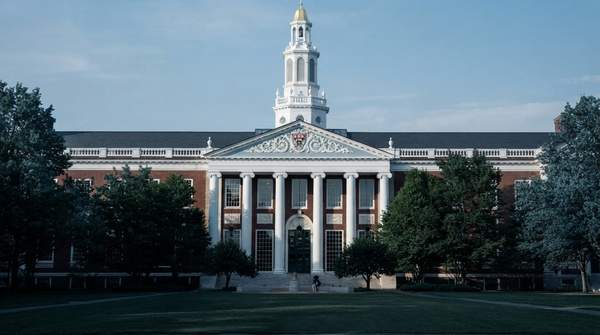
Raikes School Showcases Student Startups at Design Studio Event

A single grand prize winner in the 2025 Alumni New Venture Competition will walk away with $75,000.

EC
Ethan Calder

May 2, 2026 · 3 min read

Students from the Raikes School presenting their innovative startup projects at the Design Studio Event, showcasing entrepreneurial talent and future business ideas.

A single grand prize winner in the 2025 Alumni New Venture Competition will walk away with $75,000. This sum can jumpstart a startup more effectively than many traditional seed rounds. Such non-dilutive capital offers a critical early funding source, accelerating a student venture's trajectory.

Local university student entrepreneurship programs and startup showcases are vital for practical experience and regional networking. However, the most substantial non-dilutive funding and national recognition are concentrated in a few elite, highly competitive programs.

The landscape of student entrepreneurship funding is likely to become more stratified, with a clear divide between programs offering foundational experience and those providing significant capital. This stratification could drive top talent towards institutions with the deepest financial backing, impacting the reach of university student entrepreneurship initiatives.

The Jeffrey S. Raikes School of Computer Science and Management hosted its Design Studio Showcase event on April 24, according to Silicon Prairie News. Such regional events remain crucial for practical experience, even as larger funding opportunities emerge elsewhere.

Local Impact: Industry Engagement at Raikes

  • Lincoln-based sportstech company Hudl was recognized for sponsoring 15 Design Studio projects over the years, according to Silicon Prairie News. Hudl's sponsorship of 15 Design Studio projects over the years demonstrates sustained corporate belief in student work.
  • Kana Systems, a Lincoln-based startup specializing in AI and data-informed decision making in the defense sector, sponsored its first Design Studio project this year, according to Silicon Prairie News. These corporate engagements primarily offer 'soft' support through mentorship and project experience, not direct capital.

Corporate involvement in programs like Raikes validates local industry engagement. Students gain real-world application and regional networking. This solidifies local showcases as crucial for practical experience, distinct from the capital focus of elite competitions.


The High Stakes of Elite Competitions

The New Venture Competition (NVC) offers $210,000 in non-dilutive funding, according to HBS. This prize pool establishes a distinct tier of support. The 2025 Alumni New Venture Competition awards $75,000 to the Grand Prize Winner and $25,000 to the Runner-up, according to Entrepreneurship-hbsab. The NVC's $210,000 in non-dilutive funding and the 2025 Alumni New Venture Competition's $75,000 Grand Prize and $25,000 Runner-up awards underscore a stark financial disparity: elite competitions provide direct cash prizes, while local programs offer project experience. Such capital can significantly accelerate a student startup's trajectory beyond what local showcases typically offer, widening the gap in tangible financial support for founders.

Navigating the Elite Entrepreneurial Landscape

Participating teams in the NVC require at least one Harvard Business School MBA student in a primary role, according to HBS.edu. This academic pedigree limits participation. Only the 10 finalist teams from the Baylor New Venture Competition are eligible for the Elevator Pitch Competition, according to Hankamer Baylor. The NVC's requirement of at least one Harvard Business School MBA student in a primary role and the eligibility of only 10 finalist teams from the Baylor New Venture Competition confirm that substantial university-backed capital flows through highly exclusive, pedigree-driven channels. Most student entrepreneurs must vie for experience, not significant funding. This creates a two-tiered system where the path to substantial university-backed capital is gated, favoring a select few.

Formalizing Funding: The Future of University Ventures

The Polsky Center offers a non-negotiable Simple Agreement for Future Equity (SAFE) for companies receiving prize money, according to Polsky UChicago. This introduces a hidden cost; 'prize' money can convert to equity. While the HBS NVC boasts '$210K in non-dilutive funding', the Polsky Center's 'non-negotiable SAFE' indicates a subtle shift: some university competitions are moving prize money from pure grants to early-stage investments. This blurs the lines for founders expecting clean capital, fundamentally altering the nature of the 'prize.' The adoption of standardized investment vehicles like SAFE agreements by university centers professionalizes academic entrepreneurship funding.

If university programs continue to formalize funding with investment vehicles like SAFE agreements, the line between academic support and venture capital will likely disappear by 2026, forcing student founders to navigate more complex deal structures earlier.