
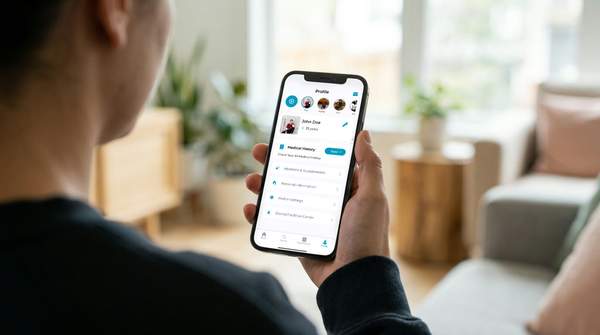
Looking after a family's healthcare needs can involve a surprising amount of organization. Parents may need to remember children's medical appointments, adults might manage prescriptions and ongoing conditions, and caregivers may help older relatives keep track of their medical histories. When several people depend on one household's coordination, healthcare information can quickly become difficult to manage.
My Journal Med offers a personal medical journal app designed to help users document and organize important health information. Its features include medical history records, symptom documentation, medication and allergy details, appointment scheduling, calendar alerts, and notes from doctor visits. These capabilities can be useful for individuals and family members who want a more structured way to keep track of healthcare information.
For people balancing multiple responsibilities, having a consistent recordkeeping routine can make everyday healthcare coordination more manageable. Here are five ways My Journal Med can support that process.
1. Create a More Complete Record of Important Medical Details
Family healthcare responsibilities often involve information that is easy to overlook. A caregiver might remember that a relative has an allergy but forget the details of a previous procedure. A parent may know which medication a child takes but have difficulty recalling the exact dosage during an unexpected medical consultation.
A personal medical journal provides a place to document these details systematically.
My Journal Med allows users to create a personal profile containing essential information such as their name, gender, blood type, and date of birth. Its setup questionnaire also asks about allergies, medications, dosages, and subscribing doctors. Users can then document their medical history and procedures.
For someone organizing healthcare information, this structure provides a useful starting point. Instead of keeping important details in unrelated notebooks, messages, or loose documents, users can maintain a dedicated medical record.
This is particularly relevant for people managing ongoing healthcare needs. A relative who sees multiple specialists may have several diagnoses, procedures, and treatment details worth documenting. A parent coordinating a child's healthcare may also appreciate having a consistent place to record relevant medical information.
The usefulness of these records depends on accuracy. Entries should be checked and updated whenever a healthcare professional confirms a change in diagnosis, medication, or treatment.
2. Make Appointment Coordination Less Dependent on Memory
Keeping track of appointments can become complicated when several family members have different healthcare schedules. A routine checkup, a specialist consultation, and a follow-up visit may all require separate preparation.
My Journal Med includes an appointment calendar that allows users to schedule medical visits, apply color coding, and receive alerts for scheduled appointments.
These features offer a practical way to make healthcare commitments easier to review. Color-coded entries can help distinguish different appointments, while alerts provide reminders about scheduled events.
For example, a caregiver coordinating an older relative's healthcare might use the calendar to keep upcoming consultations visible. A parent could also use a more structured scheduling routine to reduce the likelihood of overlooking a child's scheduled checkup.
The ability to add notes to specific calendar dates provides another useful organizational option. Users can record relevant details about a visit, including questions to raise, information discussed, or matters that need attention afterward.
This approach can also help with follow-up planning. When an appointment has concluded, reviewing the corresponding notes may help users identify what was discussed and what information should be brought to the next consultation.
A calendar cannot eliminate every scheduling challenge, but it can provide a consistent reference instead of relying entirely on memory.
3. Keep Medication and Allergy Details Organized
Medication management can be particularly demanding when several family members have different prescriptions or healthcare requirements. Even when a caregiver knows what each person takes, remembering medication names, dosages, and relevant allergies can be difficult.
My Journal Med provides fields for documenting medication information and known allergies as part of its personal medical profile. This allows users to maintain a written reference rather than repeatedly reconstructing the information from memory.
For caregivers, accurate documentation can be useful when preparing for a medical consultation or communicating with a healthcare professional. It can also help when reviewing whether the information currently recorded reflects a recent prescription change.
Consider a household where one adult takes medication for an ongoing condition while another family member has known allergies. Keeping those details organized makes it easier to consult the documented information when necessary.
However, medication records must be maintained carefully. Users should update entries following confirmed changes and avoid confusing discontinued prescriptions with current ones. They should also rely on their healthcare professionals and pharmacists for instructions about medications, interactions, and dosage decisions.
My Journal Med supports recordkeeping. It does not independently prescribe medication, determine appropriate dosages, or replace professional medication management.
4. Preserve Health Observations for More Informed Discussions
Caregivers frequently notice changes in a family member's health before those observations become part of a formal medical consultation. A relative might mention recurring discomfort, changes in how they feel, or symptoms that appear under particular circumstances.
The challenge is remembering those observations accurately when a doctor eventually asks for details.
My Journal Med supports symptom documentation and recording lifestyle patterns alongside other health information. This gives users an opportunity to maintain written observations rather than depending solely on recollection.
For example, a caregiver supporting an older adult might record when a recurring symptom was reported and any relevant circumstances. Someone helping a family member manage an ongoing condition could also document observations that the individual wants to discuss with a healthcare professional.
These records are not clinical assessments. A pattern in personal notes does not establish a diagnosis or demonstrate that one activity caused a particular symptom. Qualified healthcare professionals must interpret symptoms within the appropriate medical context.
Nevertheless, consistent documentation can make it easier to describe what happened, when it occurred, and whether similar experiences have been reported before.
This can be especially valuable during appointments involving complex medical histories, where several details may need to be discussed in limited time.
5. Support Better Communication Between Patients, Caregivers, and Healthcare Providers
Family healthcare coordination works best when the people involved have accurate information and understand their respective responsibilities. This can be challenging when one person attends appointments while another handles scheduling or helps maintain medical records.
My Journal Med is designed to make personal healthcare information easier to organize and share with healthcare providers and loved ones.
A documented medical history can help a patient explain previous diagnoses and procedures. Medication and allergy information can provide additional context for healthcare discussions, while appointment notes can help preserve details from earlier consultations.
For families, this can create a more useful starting point for conversations about ongoing care. A caregiver might help a relative prepare information for an appointment, while the patient remains involved in reviewing and communicating their own healthcare needs whenever possible.
Respect for privacy and personal choice remains essential. Medical information should only be shared with appropriate individuals, with the patient's permission where required. Caregivers should also confirm important information directly with the patient or healthcare provider rather than assuming that an old entry is still accurate.
The goal is to improve organization and communication, not to transfer medical decision-making away from qualified professionals.
Making Family Healthcare Organization More Manageable
Managing healthcare information for one person requires attention. Coordinating several family members' medical responsibilities can require even more effort, particularly when appointments, medications, allergies, procedures, and ongoing symptoms all need to be considered.
My Journal Med offers a dedicated space for documenting many of these details. Its profile setup, medical history records, symptom tracking, appointment calendar, alerts, and visit notes provide practical organizational tools for people who want a more consistent approach to personal healthcare recordkeeping.
The app is available through the Apple App Store and Google Play. Families and caregivers interested in organizing medical information can explore its features and consider how a personal medical journal might fit into their existing routines.
Good healthcare coordination starts with reliable information, regular updates, and clear communication. My Journal Med can help make the recordkeeping side of that responsibility easier, allowing individuals and families to approach their healthcare conversations with better-organized information.